Government Development & Future Portfolio

Engineering the Government of Tomorrow

An analytical exploration of how the Ministry of State for Government Development and the Future was conceived, structured, and deployed as the engine of national transformation.

Creation of a Ministry for the Future

The establishment of the Ministry of State for Government Development and the Future in 2020 represented a watershed moment in the UAE's governance evolution. Born from a comprehensive cabinet restructuring initiated by His Highness Sheikh Mohammed bin Rashid Al Maktoum, this ministry was not merely an administrative reorganization — it was a strategic declaration that the UAE would institutionalize future-thinking as a core function of government.

The ministry's creation responded to a critical insight: that traditional government structures, designed for stability and continuity, were insufficient to navigate the accelerating pace of technological change, shifting demographic patterns, and emerging global challenges. The UAE needed a dedicated institutional capacity for anticipating, preparing for, and shaping the future — rather than simply reacting to it.

H.E. Ohood Al Roumi was the natural choice to lead this portfolio, given her track record of driving innovation from within government and her demonstrated ability to bridge the gap between visionary strategy and practical implementation.
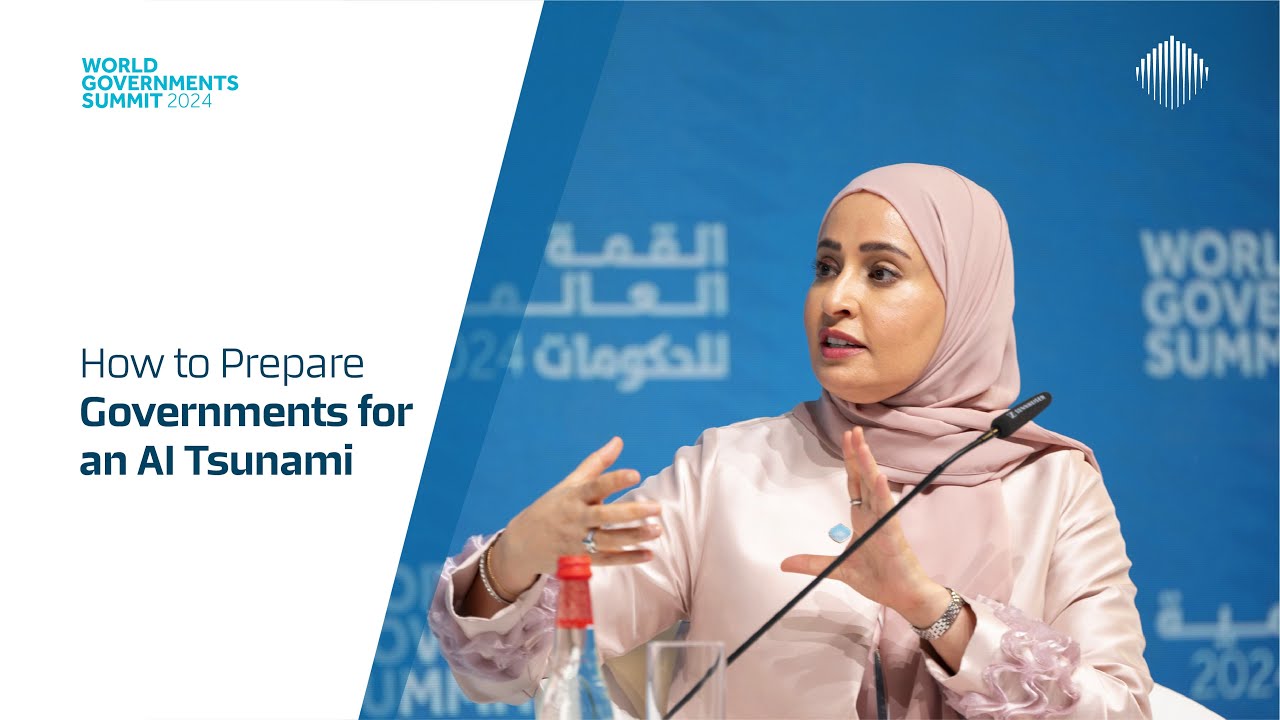

UAE Government Innovation

Government Transformation Strategy

The multi-layered framework driving systematic modernization across all government functions.

Layer 1: Digital Infrastructure Foundation
The foundational layer of the UAE's government transformation focuses on building robust digital infrastructure — a national data ecosystem that connects all government entities through secure, interoperable platforms. This includes the establishment of the UAE's national data lake, API-first government architecture, and cloud-first policy that enables real-time data sharing across ministries. The infrastructure layer also encompasses the national digital identity system (UAE Pass), which provides seamless, verified citizen access to all government services through a single digital credential. This eliminates the fragmentation of separate authentication systems and creates the unified digital identity that enables truly integrated service delivery.
Layer 2: AI-Powered Service Delivery
The second layer deploys artificial intelligence across the entire government service portfolio — from chatbot-powered citizen assistance to machine learning algorithms that predict demand patterns and optimize resource allocation. The UAE AI Strategy positions the nation to derive 50% of its GDP from AI-driven services by 2031. Key implementations include predictive health analytics that anticipate disease outbreaks, AI-powered traffic management systems, automated document processing that reduces visa and licensing wait times to minutes, and natural language processing systems that provide government services in over 20 languages. Each AI deployment is governed by the UAE's comprehensive AI ethics framework, ensuring transparency, accountability, and fairness.
Layer 3: Human Capital Transformation
The third layer addresses the human dimension of government transformation — recognizing that digital tools are only as effective as the people who deploy them. This involves a comprehensive reskilling program for 90,000+ federal employees, the establishment of the Government Innovation Labs as centres of excellence, and the creation of a government talent pipeline that attracts top global expertise. The human capital strategy also includes the introduction of flexible work arrangements, innovation time allocations, and a performance management system (Adaa) that rewards creative problem-solving alongside operational efficiency. Leadership development programs ensure that senior officials possess both the technical literacy and transformation leadership skills necessary to drive change.
Layer 4: Future Readiness & Anticipatory Governance
The highest layer of the strategy focuses on building institutional capacity for anticipatory governance — the ability to identify emerging trends, model potential futures, and develop proactive policy responses. This includes the establishment of the UAE's Government Foresight Unit, which employs scenario planning, horizon scanning, and Delphi methodologies to map potential future challenges and opportunities across key domains including climate, technology, demographics, and geopolitics. The Future Readiness Index benchmarks the UAE against global peers and identifies capability gaps, while regulatory sandboxes provide controlled environments for testing innovative approaches before full deployment.

UAE Future Readiness Index

Benchmarking the UAE's preparedness across critical future-impact domains.

Readiness by Domain
AI & Automation96%
Digital Infrastructure98%
Climate Adaptation82%
Workforce Agility89%
Regulatory Innovation94%
Data Governance91%
Global Benchmark Comparison
UAE#1
Singapore#2
Estonia#3
South Korea#4
Denmark#5
United Kingdom#6
H.E. Ohood Al Roumi Digital Government

The Digital Government Paradigm

The UAE's digital government transformation under H.E. Al Roumi's leadership has produced one of the most sophisticated e-governance ecosystems in the world. The strategy goes beyond simple digitization of existing services — it represents a fundamental reconceptualization of how government operates, communicates, and delivers value.

Central to this paradigm is the concept of "Government as a Service" (GaaS) — treating government functions not as bureaucratic processes but as user experiences that must be continuously optimized. Every citizen interaction is measured, analyzed, and refined using the same UX methodologies employed by the world's leading technology companies.

The results speak for themselves: the UAE now processes over 4,000 government services digitally, with an average transaction time of under 5 minutes and a citizen satisfaction rate exceeding 90%. International organizations including the World Bank, OECD, and United Nations have recognized the UAE's digital government model as a global best practice worthy of emulation.