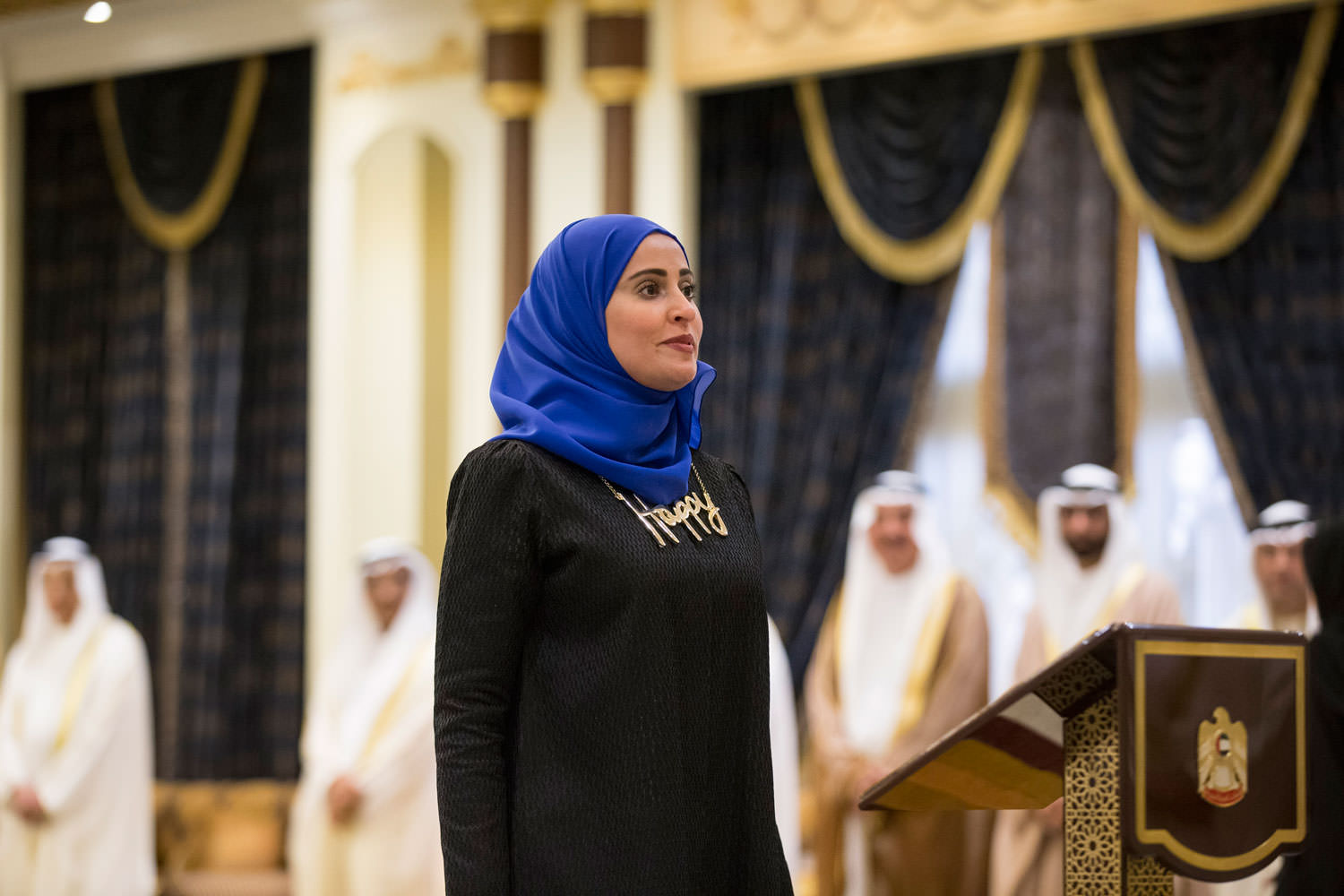
About H.E. Ohood Al Roumi

The Architect of Government Transformation

A visionary leader whose academic rigour, strategic intellect, and unwavering commitment to innovation have reshaped the foundations of governance in the United Arab Emirates and beyond.

H.E. Ohood Al Roumi

From Academic Excellence to National Leadership

H.E. Ohood bint Khalfan Al Roumi's trajectory from academic scholar to one of the most influential government innovators in the world is a study in how intellectual rigour, combined with an unrelenting drive for excellence, can transform entire systems of governance. Born and raised in the United Arab Emirates, she demonstrated an early aptitude for systems thinking and strategic analysis that would later define her approach to government transformation.

Her career is distinguished not merely by the positions she has held, but by the paradigm shifts she has initiated — from pioneering the world's first Minister of Happiness portfolio to architecting the UAE's comprehensive government modernization strategy that has been studied and replicated by over 40 nations.

Her Excellency's approach to governance combines the analytical precision of a systems engineer with the empathetic understanding of a social scientist — creating policies that are both technically sound and deeply human-centred.

A Rigorous Intellectual Foundation

The academic institutions that forged a world-class governance leader.

Foundation
United Arab Emirates University
Her Excellency began her academic journey at the UAE's flagship national university, Al Ain, where she cultivated a deep understanding of governance frameworks, public administration theory, and the unique socio-political dynamics of the Gulf region. This foundational education provided the institutional knowledge that would later enable her to redesign government systems from within.
Specialization
University of Sharjah
Pursuing further specialization at the University of Sharjah, H.E. Al Roumi deepened her expertise in strategic management and organizational development. Her research focused on the intersection of technology and public administration — a prescient area of study that anticipated the digital transformation wave that would reshape global governance in the decades to come.
Executive Leadership
Mohammed Bin Rashid Leadership Program
Selected for the prestigious Mohammed Bin Rashid Program for Leadership Development — an elite program designed to cultivate the next generation of UAE government leaders. This immersive program provided exposure to global best practices in governance innovation, strategic foresight, and transformational leadership methodologies from institutions worldwide.

The Evolution of Strategic Thinking

How academic training transformed into a revolutionary approach to governance.

Phase One — Systems Analysis
Understanding Government as a Complex Adaptive System
Her Excellency's early career was marked by a deep analytical phase where she studied government operations as complex adaptive systems. Rather than viewing ministries and departments as isolated silos, she recognized the interconnected nature of public services — understanding that a change in immigration policy affects healthcare demand, which impacts education planning, which influences labour market dynamics. This systems-level thinking became the foundation for her later cross-ministerial reform programs.
Phase Two — Design Thinking
Citizen-Centred Service Architecture
The second phase saw her integrate design thinking methodologies into government operations — a radical departure from the traditional policy-first approach. By starting with citizen needs rather than institutional capabilities, she pioneered the concept of "life events" service design — organizing government services around the moments that matter most to citizens (birth, marriage, starting a business, retirement) rather than around ministerial structures.
Phase Three — Predictive Governance
From Reactive to Anticipatory Government
The most transformative phase of her strategic evolution was the shift from reactive to predictive governance. Under her leadership, the UAE began deploying AI and machine learning to anticipate citizen needs before they were expressed — proactively offering services, identifying potential issues, and creating policy interventions based on data patterns rather than waiting for problems to manifest. This represents a fundamental reimagining of the government-citizen relationship.

Leadership Philosophy & Governance Mindset

"A government that requires its citizens to struggle through complexity has failed in its fundamental purpose. Our role is to make government invisible — to create such seamless, intuitive service delivery that citizens feel supported without ever encountering bureaucracy."
— H.E. Ohood bint Khalfan Al Roumi
Invisible Government Principle
Her Excellency advocates for "invisible government" — the idea that the best government is one citizens never have to think about. Services should be delivered proactively, intuitively, and seamlessly, eliminating the need for citizens to navigate complex bureaucratic processes. This philosophy drives the UAE's investment in AI-powered service delivery and predictive analytics.
Platform Government Model
Rather than viewing government as a provider of services, Her Excellency envisions government as a platform — an enabling infrastructure that empowers citizens, businesses, and civil society to create value. This platform approach reduces government's operational burden while expanding its impact through ecosystem partnerships and open data initiatives.
Continuous Experimentation Culture
Her Excellency has institutionalized a culture of experimentation within government — encouraging ministries to test new approaches through pilot programs, regulatory sandboxes, and innovation labs. This tolerance for controlled failure has accelerated the pace of government innovation, enabling rapid learning and iteration.
Inclusive Future Design
Central to her governance mindset is the principle that future-building must be inclusive — that the benefits of technological advancement and government innovation must reach every segment of society. Her policies ensure that digital transformation enhances rather than excludes, with particular attention to vulnerable populations and accessibility standards.